| Link to Edit Entry | Edit Entry |
|---|---|
| Station Lead Name | Brett Parker |
| Station Contact Name | Conrad Heid |
| Station Name | Symphera - Redefining surgical workflow efficiency |
| Please upload photos or drawings of your station floor plan. | 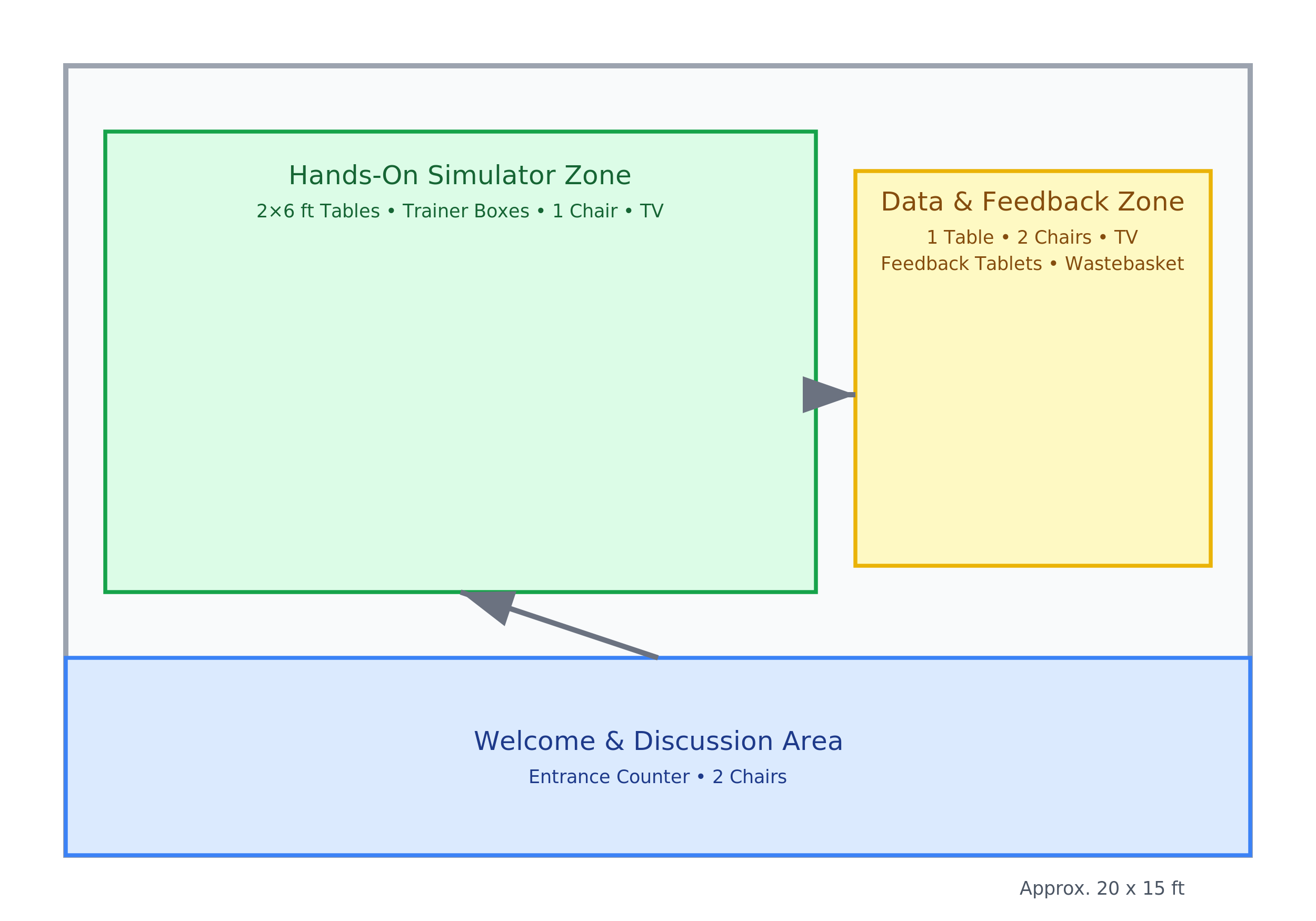 |
| Do you have any Industry/Vendor Support for your station? | The only relevant industry support comes directly from Symphera GmbH which has developed the Symphera System Prototype and will provide all necessary device hardware. |
| Please select one option | NO, Our station does NOT require any special equipment requested from Industry (or we will be bringing our own) |
| How does your station benefit the SAGES membership? | The Symphera station offers surgeons an immersive experience with a next-generation laparoscopic multi-tool system designed to streamline intraoperative workflow. Participants will gain hands-on exposure to automated intracorporeal tool exchange and directly assess its impact on efficiency, ergonomics, and overall operative flow. SAGES members will also have the opportunity to discuss the latest pre-clinical data recently published in Surgical Endoscopy (“Redefining surgical workflow efficiency: Evaluation of a novel laparoscopic multi-tool prototype”), which demonstrated feasibility of intracorporeal tool-changes in <3.5sec. and improved ergonomics. Building on these peer-reviewed findings, the hands-on setup allows participants to experience the system used in the study and explore its potential applications in both minimally invasive surgery. Beyond the demonstration, the station fosters open exchange between clinicians and engineers to shape future developments. By combining published evidence with interactive testing, SAGES members can critically evaluate the potential of this new surgical platform to enhance workflow efficiency, precision, and surgeon autonomy in the next generation of minimally invasive procedures. |
| Explain, in detail, what the hands-on components of your station will be | The Symphera station is structured around two interactive zones designed to provide both experiential learning and scientific context. 1. Hands-On Simulator Zone: 2. Data & Feedback Zone: |
| Explain the innovative and/or novel approaches incorporated into your station | The Symphera station introduces a unique fusion of hands-on surgical simulation, data-driven insight, and real-time feedback—bridging innovation and education in minimally invasive surgery. For the first time, surgeons can directly experience automated intracorporeal tool exchange, an innovation that challenges one of the fundamental workflow limitations of conventional laparoscopy. This interactive approach transforms an engineering advancement into an educational experience, allowing participants to critically assess how automation may enhance efficiency, reduce workload, and improve instrument control. In addition to the simulator-based training, the station integrates preclinical study data published in Surgical Endoscopy into a live educational context. This combination of scientific evidence and tactile experience enables participants to connect measurable outcomes—such as reduced tool-change time and improved usability—with their own hands-on impressions. Finally, through immediate participant feedback and workflow reflection, surgeons contribute to an iterative design process, influencing future system development. The result is an environment that not only demonstrates a novel technology but also fosters active learning and dialogue at the intersection of innovation and surgical education. |
| Are there any sponsoring and/or related SAGES committees involved with your station? | Besides the provision of the prototype and support material from Symphera GmbH there is no additional sponsoring. |
| Workflow Step | Staff review |
| Approval Status | Unapproved |

SAGES 2026 Annual Meeting
March 25-28, 2026 in Tampa, Florida